
The rise of Hold And Win Game systems across UK-facing online casinos has transformed how players engage with slot play. These games, featuring their lock-and-respin bonus rounds, introduce a learning curve that many think is steep. Yet evidence from player behaviour studies and operator feedback indicates the opposite. British players, accustomed to structured bonus systems and transparent rules, adapt to Hold and Win games with notable speed. The gameplay strip away unnecessary complication, substituting elaborate multi-stage features with a simple, repeatable golden coin or symbol collection phase. This transparency hastens mastery, converting first-time players into confident strategists within a handful of sessions. Comprehending why this change happens so fast necessitates examining the design ethos, the psychological cues built into the gameplay, and the way UK players engage with iGaming content differently from other markets.
The Key Mechanics That Characterize Hold and Win Games
At the core of every Hold and Win title lies a deceptively simple bonus trigger. Special symbols, often shown as gold coins, diamonds, or orbs, hit the reels during base play. When a specific number shows up at once, the bonus round activates. The triggering symbols remain fixed, and the remaining positions spin again separately. Each new matching symbol that arrives also locks, resetting the respin counter to its starting value. The round concludes when no new symbols land or when all positions fill. This structure takes away the cognitive load of managing multiple bonus paths. Players zero in on symbol accumulation, which establishes an intuitive rhythm. The omission of complex decision trees means even novices comprehend the objective within the first bonus trigger. The UK market, filled with feature-rich Megaways and cluster-pay titles, considers this streamlined approach pleasantly accessible.
Symbol Recognition and Real-Time Feedback Systems
Hold and Win games excel at offering rapid response, a key factor in accelerating the learning curve. When a bonus symbol drops, the visual and audio cues are clear. Coins shine, reels decelerate, and a clear chime marks proximity to the feature. This sensory clarity teaches the brain more quickly than subtle animations ever could. UK players, who often play slots during short mobile sessions on travel or breaks, benefit from this instant recognition. There is no need to consult paytables mid-session. The game signals its intentions through design. The locked symbols during the bonus round also provide a running tally of progress. Watching positions occupy incrementally generates anticipation and strengthens the ruleset. By the third or fourth bonus trigger, the player has internalised the respin logic fully, moving from conscious learning to automatic play.
The Role of Fixed Jackpot Tiers
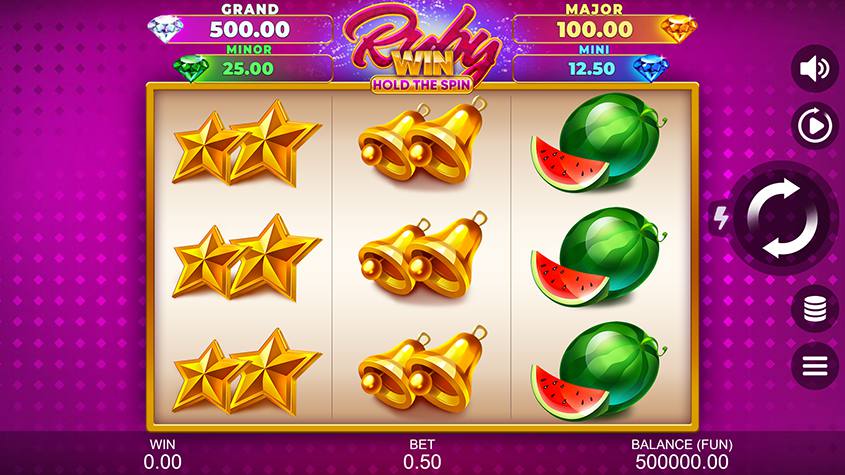
Many Hold and Win games feature fixed jackpot tiers presented steadily above the reels. Mini, Minor, Major, and Grand values sit in plain view, adjusting automatically as stakes change. This transparency removes another layer of confusion. Players instantly understand the ceiling of each bonus round and the connection between bet size and potential reward. In traditional slots, jackpot mechanics often are concealed behind opaque triggers or random activations. Hold and Win titles flip that secrecy. The displayed values act as constant drivers and benchmarks. A UK player changing their stake from £0.20 to £1.00 witnesses the jackpot figures scale proportionally, reinforcing the risk-reward calculation without needing external guidance. This visual agreement between player and game shortens the mastery timeline significantly.
The Developer Ecosystem and Cohesive Design System
Numerous developers now create Hold and Win titles, yet a uniform design approach has emerged across the genre. Games from various developers share fundamental traits: the lock symbol, the respin reset, the jackpot tiers. This standardization means that mastering one title transfers skills to others almost fully. A UK player who understands the system on a particular title can transition to a different Hold and Win game and spot the framework instantly. The aesthetic design changes, but the core mechanics remains constant. This inter-game familiarity is uncommon in the slot industry, where bonus mechanics often vary wildly between titles. The developer ecosystem has essentially established a common framework for Hold and Win, and the UK player base is well-versed in it. This cross-functionality speeds up the perceived mastery curve because each new release feels like a adaptation on a familiar concept rather than a wholly unfamiliar structure to learn.
Volatility Transparency and Expectation Management
Hold and Win games commonly indicate their volatility profile through the frequency of bonus triggers and the magnitude spread of locked symbol values. Players rapidly understand to tell apart between high-variance titles where jackpot symbols appear seldom but carry substantial multipliers, and lower-variance versions where the bonus triggers regularly with smaller rewards. This fine-tuning happens organically through play. The UK audience, known for its logical perspective to gambling, detects these signals rapidly. Operators often offer RTP and volatility information directly in the game lobby, additionally speeding up the learning process. Armed with this knowledge, players adapt their expectations and session strategies accordingly. Mastery is not just about initiating the round; it is about comprehending what the bonus is likely to deliver. Hold and Win games make this chance spectrum visible through repeated exposure, and UK players demonstrate proficiency in reading it.
Cognitive Drivers That Speed Up Mastery
Hold and Win games utilize fundamental psychological principles that make the learning process feel natural. The variable ratio reinforcement schedule, where bonus triggers occur randomly but with consistent visual cues, keeps engagement high during the learning phase. Each near-miss, where two bonus symbols land and the third teeters on the edge, strengthens the player’s understanding of the trigger condition without conscious study. The brain registers the pattern subconsciously. The locked symbol mechanic also leverages the endowment effect. Once a coin locks onto the grid, the player perceives it as a possession, heightening the emotional stake in the respin outcome. This psychological ownership makes the rules impactful. Players do not need to memorise a manual; they remember how it felt to watch their locked symbols multiply.
Removing of Decision Paralysis
Traditional bonus rounds often give players with choices: pick a chest, select a free spins multiplier, or gamble a win. These decision points create cognitive friction, especially for newcomers unsure of optimal strategy. Hold and Win games remove this entirely. Once the bonus triggers, the game executes automatically. There is no wrong move, no regret over a suboptimal pick. This absence of agency paradoxically speeds up mastery because the player’s attention remains solely on outcome observation. The ruleset is acquired through watching, not through doing. For UK players who value efficiency and dislike ambiguous risk, this design philosophy strikes a chord. The learning process becomes a passive, enjoyable experience rather than an active puzzle. Operators note that customer support queries for Hold and Win titles are markedly lower than for feature-dense alternatives, indicating fewer points of confusion.
Sound and visual Anchoring and Memory Retention
The sound design in Hold and Win games functions as a mnemonic device. The climbing pitch as respins dwindle, the celebratory clang when a jackpot symbol fills the grid, and the consistent beat of the lock animation all embed the rules into sensory memory. UK players, often playing with headphones in public spaces, form strong auditory associations with the mechanics. These cues trigger recall faster than visual information alone. A player returning to a title after a week’s absence will pick up on the bonus round’s audio signature instantly, reactivating their learned understanding without conscious effort. Developers allocate substantial budget in this audio branding precisely because it flattens the re-learning curve. The result is a game that feels instantly familiar on every return visit, a quality that keeps UK players loyal to specific Hold and Win franchises.
Comparing Hold and Win to Other Bonus Mechanics
To thoroughly appreciate the rapid mastery curve, one must contrast Hold and Win against current alternatives. Megaways slots, with their changing reel heights and cascading symbols, need players to comprehend win ways that change with every spin. The cognitive load is steady. Cluster-pay titles require spatial reasoning and pattern recognition. Free spins collection features commonly involve various scatter types and escalating multipliers that alter round to round. Each of these mechanics has a particular learning phase that can cover dozens of sessions. Hold and Win games, by comparison, function on a single axis: collect the special symbols. The simplicity is not a limitation but a careful design choice that emphasises accessibility. UK players who have moved through complex slots often describe returning to Hold and Win titles as a palate cleanser, a reversion to fundamentals that needs zero mental overhead.
Wager Calibration and Bankroll Understanding
Mastering a slot involves more than understanding the bonus round; it demands grasping how stake size works with feature frequency and potential. Hold and Win games make this relationship transparent. The persistent jackpot display updates in real time, and the bonus trigger rate remains fairly stable across stakes. Players rapidly learn that higher bets amplify the reward ceiling without altering the core probability structure. This linear scaling is intuitive. Some progressive jackpot slots demand complex qualification criteria or bet multipliers to unlock certain tiers. The UK player, habituated to clear terms, values the absence of hidden thresholds. Within a short session, they can calibrate their bankroll to the displayed jackpot values, making informed decisions about session length and stake sizing. This financial literacy layer is element of the mastery package, and Hold and Win games impart it implicitly.
How come UK Players Transition At a Higher Rate Versus Other Markets
The United Kingdom features a unique iGaming ecosystem that prepares players for quick adaptation to systematic bonus formats. Regulatory transparency mandated by the UK Gambling Commission means operators must show terms, RTP percentages, and bonus conditions transparently. This environment fosters a player base that reviews game rules before spinning. When a Hold and Win title loads, the average British user already looks for logical, well-documented mechanics. The game’s simple design fits ideally with this expectation. The UK’s long history with fixed-odds betting terminals in high-street bookmakers created a generation comfortable with lock-in respin concepts. The digital Hold and Win format feels like a natural evolution of those familiar shop-floor experiences, lowering the psychological barrier to entry.
Mobile-First Consumption Habits
British players consume slot content primarily on smartphones, with gaming sessions lasting under fifteen minutes. Hold and Win games are engineered for this divided concentration. The bonus feature concludes rapidly, often within thirty seconds, delivering a whole emotional arc without requiring long focus. This mobile-first design philosophy means players come across the main loop more frequently per session. A twenty-minute commute might yield five or six bonus activations, each one reinforcing the mechanics. The tight feedback loop accelerates skill. Contrast this with complicated narrative-driven slots that demand forty minutes to show their complexity. The UK audience, by simple repetition frequency, becomes skilled in Hold and Win rules faster. Operators indicate that these titles regularly place among the fastest to turn new players into repeat players, a measure closely linked to the easy difficulty curve.
Player Knowledge Sharing and Streamer Influence
The UK slot streaming community on platforms like Twitch and Kick has heightened the speed at which Hold and Win knowledge spreads. Prominent British streamers regularly feature these titles, narrating the bonus mechanics in real time. Viewers take in the rules vicariously before ever placing a bet themselves. This passive learning layer means many players begin their first session already understanding the trigger threshold, the respin reset rule, and the jackpot collection process. The streamer’s commentary demystifies variance and sets realistic expectations. When a viewer subsequently loads the same game, the learning curve has already been flattened by hours of observational exposure. The social dimension of UK gambling culture, where tips and strategies circulate rapidly through forums and Discord servers, further compresses the mastery timeline.
The way Operators Optimise the Onboarding Experience
UK-facing casino operators have optimised the player onboarding journey specifically around Hold and Win titles. New player welcome offers often include free spins on these games, understanding that the shallow learning curve makes them suitable for conversion. A player who receives twenty free spins on a Hold and Win slot gets the core mechanic multiple times without risking their own funds. This risk-free repetition cements the ruleset. Operators also place these titles prominently in lobby categories like “Easy to Play” or “Quick Wins,” signalling accessibility to newcomers. The curated placement reduces the friction of game selection. Many platforms now embed short tutorial overlays that activate on first launch, visually illustrating the lock-and-respin sequence in under ten seconds. These micro-tutorials, while brief, offer just enough scaffolding to eliminate any initial hesitation. The combination of free play exposure and guided first steps guarantees the UK player arrives at real-money play already competent.
The Information Behind Rapid Proficiency
Performance data from UK operators indicate the speed of mastery with Hold and Win games. Typical time to first bonus trigger stands at three to four minutes of play. Within that timeframe, the player has witnessed the symbol landing pattern and understood the visual language of the near-trigger. By the tenth minute, most players have gone through two bonus rounds and can accurately predict the respin reset behaviour. Support ticket data shows that queries about Hold and Win mechanics fall to near zero after the first week of a title’s release, suggesting that the player base self-educates rapidly. Heatmap analysis of in-game behaviour reveals that UK players rarely hover over paytable buttons after their early sessions, showing that the rules have been learned. This data-driven picture supports what anecdotal observation indicates: Hold and Win games feature one of the smoothest learning curves in modern iGaming, and the UK audience learns them faster than any demographic measured.
Cross-Platform Consistency and Smooth Transition
The Hold and Win mechanic remains the same across PC, tablet, and mobile devices. The grid layout, symbol size, and bonus animation translate without loss. This sameness means a player who understands the feature on a desktop at home can instantly apply that skill during a mobile session on the train. There is no interface relearning necessary. UK players, who regularly move between devices throughout the day, benefit especially from this reliability. The game state and ruleset go with them seamlessly. This cross-platform fidelity erases a common hassle that delays learning in other titles, where mobile versions might compress or alter the bonus presentation. Hold and Win designers prioritise responsive design that preserves the core visual hierarchy, making sure that the locked symbols stay the focal point regardless of screen size. The effect is an seamless learning experience that accumulates across sessions and devices without pause.
